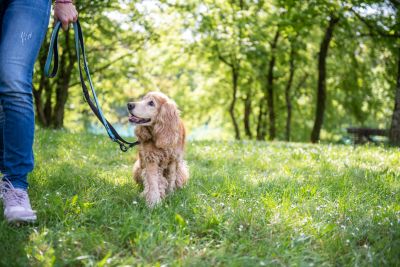
Why Is My Dog Overwhelmed Outside the Home?
Some dogs appear settled and responsive at home but become completely different as soon as they go outside.
Your dog may pull, scan the environment, bark, lunge, whine, jump, refuse food or appear unable to hear you. Walks may feel frantic rather than enjoyable, and busy environments can quickly become too much for both dog and owner.
This does not necessarily mean that your dog is stubborn, disobedient or deliberately ignoring you. They may be too worried, excited, frustrated or overwhelmed to respond in the way they can at home.
Understanding what is affecting your dog outdoors is the first step towards creating calmer and more manageable experiences.
A dog who cannot respond outdoors may not need stricter obedience. They may need more distance, less pressure and support that matches their emotional state.
Signs Your Dog May Be Overwhelmed Outdoors
An overwhelmed dog may:
- Pull constantly on the lead
- Scan from side to side
- Struggle to take food
- Ignore familiar cues
- Bark or lunge at dogs
- React to people, traffic or movement
- Whine or vocalise
- Jump up at their owner
- Grab or chew the lead
- Spin or move frantically
- Become fixated on scents
- Chase birds, cats or wildlife
- Startle easily
- Freeze or refuse to move
- Try to return home
- Pant when it is not hot
- Shake or tremble
- Keep their body low
- Become unable to settle
- React more strongly as the walk continues
- Take a long time to recover after returning home
- Sleep poorly after busy outings
- Appear hyperactive or restless later in the day
Some dogs become visibly frightened. Others become faster, louder and more excitable.
Both can be signs that the dog is struggling to process what is happening around them.
Why Is My Dog Calm at Home but Different Outside?
Home is usually familiar and predictable.
Outside the home, your dog may need to process:
- Other dogs
- Unfamiliar people
- Children
- Traffic
- Bicycles
- Runners
- Livestock
- Wildlife
- Sudden noises
- New smells
- Narrow pathways
- People approaching
- Dogs appearing unexpectedly
- Changes in surface
- Busy car parks
- Movement behind fences
- Unfamiliar environments
Your dog may be able to respond to cues in a quiet living room but struggle when their attention and nervous system are already occupied by the environment.
This is not proof that they know what to do and are choosing not to do it.
Skills learned at home need to be introduced gradually in environments where your dog is still able to think and learn.
Is My Dog Anxious or Overexcited?
Fear and excitement can sometimes look very similar.
Both may cause:
- Pulling
- Barking
- Jumping
- Whining
- Pacing
- Rapid movement
- Difficulty taking food
- An inability to settle
- Strong reactions to triggers
A dog may also experience mixed emotions.
For example, they may want to approach another dog while also feeling worried about the interaction. This conflict can lead to barking, lunging or frantic behaviour.
Understanding whether your dog is frightened, frustrated, excited or experiencing several emotions at once is important when deciding how to support them.
What Is Environmental Overwhelm?
Environmental overwhelm happens when the sights, sounds, scents, movement and demands within a situation exceed what your dog can currently cope with.
This may happen:
- In busy towns
- On narrow paths
- Near schools
- In crowded parks
- At cafés
- In pet shops
- At training classes
- Around traffic
- Near livestock
- In unfamiliar places
- During group walks
- At events
- In car parks
- On public transport
- When several triggers appear together
The same dog may cope well in one environment but struggle in another.
Their ability to cope can also change depending on:
- Sleep
- Pain
- Health
- Previous events that day
- Weather
- Noise
- Distance from triggers
- How long they have been outside
- Whether they can move away
- The owner’s handling
- The number of difficult experiences they have already had
What Is Trigger Stacking?
Trigger stacking happens when several stressful or exciting events occur close together and your dog does not have enough time to recover between them.
A walk might include:
- A loud vehicle passing
- A dog appearing around a corner
- A stranger reaching towards your dog
- A bicycle approaching from behind
- A narrow path with no escape route
- Another dog barking behind a fence
Your dog may cope with the first event but react strongly to the fourth or fifth.
The final trigger is not always the full reason for the reaction. Stress may have been building throughout the outing or even earlier in the day.
Signs of trigger stacking may include:
- Reactions becoming stronger as the walk continues
- Responding at greater distances
- Increased pulling
- Difficulty taking food
- Reduced ability to respond
- Longer recovery after each trigger
- Restlessness after returning home
- Increased reactivity later that day or the following day
Why Will My Dog Not Take Food Outside?
Refusing food outdoors can be a useful sign that the environment is too difficult.
Your dog may be:
- Too anxious to eat
- Highly focused on a trigger
- Overexcited
- Physically uncomfortable
- Too close to something they find difficult
- Unable to pause and process
- Full or uninterested in the food offered
Some dogs will still take food when they are worried, so eating does not always mean that your dog feels safe.
Look at the whole dog rather than using food as the only measure.
Notice:
- How they take the food
- Whether they can turn away from the trigger
- Whether their body is relaxed
- Whether they can sniff naturally
- Whether they can move calmly
- How quickly they recover
Is My Dog Being Stubborn or Ignoring Me?
A dog who cannot respond outdoors may be above their current coping threshold.
When a dog is overwhelmed, their ability to:
- Process information
- Respond to cues
- Make calm choices
- Take food
- Learn new skills
- Control impulses
- Recover from triggers
may be reduced.
Repeating cues, pulling on the lead or becoming more forceful is unlikely to make your dog feel safer.
It may add further pressure to an already difficult situation.
The environment may need to be adjusted before training can be effective.
Should I Exercise My Dog More to Tire Them Out?
More exercise is not always the answer.
Longer or busier walks may increase stress in a dog who is already struggling.
Repeated high-intensity activity can also make it harder for some dogs to settle afterwards.
Your dog may benefit from a more balanced routine that includes:
- Shorter walks
- Quieter routes
- Sniffing opportunities
- Rest
- Predictable activities
- Calm enrichment
- Appropriate physical exercise
- Individual training
- Time to recover
- Activities suited to their breed and needs
The aim is not simply to make your dog physically tired.
It is to meet their needs without repeatedly overwhelming them.
What Should I Do When My Dog Becomes Overwhelmed?
Immediate management may include:
- Creating more distance
- Moving behind a visual barrier
- Crossing the road
- Turning away early
- Leaving the environment
- Choosing quieter routes
- Walking at quieter times
- Reducing the length of the outing
- Avoiding narrow paths temporarily
- Preventing unfamiliar dogs from approaching
- Giving your dog time to sniff
- Keeping handling calm and predictable
- Allowing recovery time afterwards
- Taking your dog home when they are no longer coping
Do not remain in a difficult situation simply because you feel your dog should learn to cope with it.
Leaving early can prevent a stronger reaction and protect your dog’s confidence.
Creating distance is not avoiding the problem. It is often the first step in helping your dog remain safe enough to learn.
Should I Stop Walking My Dog?
This will depend on the individual dog and the severity of their distress.
Some dogs may benefit from:
- Shorter walks
- Quieter locations
- Driving to a calmer area
- Garden-based activities
- Sniffing sessions
- Temporary reductions in busy outings
- More recovery days
- Carefully planned exposure to the outside world
A temporary change to walks does not mean that your dog will never go out again.
It can provide time for stress levels to reduce while a more suitable plan is developed.
Dogs still need appropriate opportunities for movement, toileting, enrichment and exploration, but these should be provided in ways they can manage.
Why Can Busy Socialisation Make Things Worse?
Taking a worried or overwhelmed dog into busy environments does not automatically help them become socialised.
If your dog is already struggling, repeated exposure may teach them that the outside world is unpredictable and unsafe.
Examples include:
- Busy dog parks
- Crowded town centres
- Group walks
- Packed cafés
- Pet shops
- Events
- Close greetings with unfamiliar dogs
- Allowing strangers to touch the dog
- Remaining near a trigger until the dog stops reacting
A dog becoming quieter does not always mean they have become comfortable.
They may be exhausted, shut down or unable to respond.
Helpful exposure should be gradual, controlled and matched to what your dog can currently cope with.
Can a Dog Learn to Cope Better Outdoors?
Many dogs can make meaningful progress with appropriate support.
Progress may include:
- Taking food more comfortably
- Sniffing and exploring naturally
- Responding to their owner
- Recovering more quickly
- Walking in slightly busier areas
- Remaining calmer around movement
- Coping with triggers at a safe distance
- Choosing to move away
- Settling more easily after walks
- Managing new environments gradually
- Showing clearer communication
- Building trust in their owner’s guidance
Success does not have to mean that your dog can cope everywhere.
The goal is to improve emotional wellbeing and help your dog manage the environments that are realistically important to their life.
How Ravendale Can Help
Ravendale’s behaviour assessment looks beyond the pulling, barking or apparent lack of focus to understand what may be affecting your dog outdoors.
The assessment may explore:
- Your dog’s history
- Their behaviour at home
- The environments they find difficult
- Distance from triggers
- Body language
- Their ability to take food and respond
- Fear, frustration and excitement
- Previous experiences
- Lead handling
- Equipment
- Daily routine
- Sleep and recovery
- Exercise and enrichment
- Breed-related needs
- Pain or health concerns
- How long your dog takes to settle afterwards
- What has already been tried
You will receive practical guidance suited to your dog, lifestyle and local environment.
Further support may include:
- Safer walking strategies
- Route planning
- Helping you recognise early signs of overwhelm
- Building useful skills in quieter environments
- Gradual real-world training
- Supporting calmer responses around triggers
- Improving recovery
- Adjusting exercise and enrichment
- Reviewing progress through follow-up sessions
- Working alongside your vet where appropriate
Ravendale provides dog behaviour and real-world skills support across Horsham, Worthing, Crawley, Haywards Heath, Burgess Hill, Southwater, Henfield, Steyning, Partridge Green, Billingshurst and surrounding areas of West Sussex.
When Should I Seek Professional Help?
Professional dog behaviour support is recommended when:
- Your dog regularly barks or lunges outdoors
- Walks feel unsafe
- Your dog cannot take food or respond outside
- They are becoming increasingly fearful
- They redirect onto the lead, another dog or a person
- They try to escape
- They freeze or refuse to walk
- They take a long time to recover
- You are avoiding walks
- You feel anxious about taking them out
- Their reactions are becoming more frequent or intense
- Busy environments are affecting their welfare
- The behaviour has appeared suddenly
- Previous training has increased the problem
- You are unsure whether the behaviour is fear, frustration or overexcitement
Any sudden or unexplained behaviour change should also be discussed with your vet.
Pain, illness, changes in vision or hearing and physical discomfort can reduce a dog’s ability to cope outside.
Help Your Dog Feel Safer in the Outside World
A dog who struggles outdoors is not necessarily being difficult or disobedient.
They may be trying to cope with an environment that currently feels too intense, unpredictable or overwhelming.
Ravendale provides kind, evidence-informed behaviour support to help you understand what your dog finds difficult, reduce unnecessary pressure and build a realistic plan towards calmer, more manageable experiences outside the home.